Advertorial
30-Year-Old Couple Thought Their Gender Reveal Would Answer The Big Question. It Ended Up Starting One They Hadn't Expected.
Once they knew who they were imagining, the conversation quickly turned to what they would call him.
Written by Claire Morgan
Date: August 19th, 2026

For months, Rachel and Daniel had simply called the baby “the baby.”
Then came the gender reveal.
Almost immediately, something changed. The conversations became more specific. So did the names.
They began making lists, crossing names out and adding them back. But one question neither of them had considered would eventually make choosing one much harder:
What comes with a name before a child ever gets it?
Researchers Had Been Asking A Surprisingly Similar Question
Imagine being shown a photograph of someone you have never met.
You know nothing about the person. You have never heard them speak. You are simply given several first names and asked to choose which one belongs to the face.
It sounds like a guessing game.
Yet researchers have found across multiple experiments that people can match unfamiliar adult faces with their real first names at rates better than chance.
That led researchers to explore a fascinating possibility.
Perhaps we do not simply carry a name.
Perhaps we spend years living with the expectations that come with it.
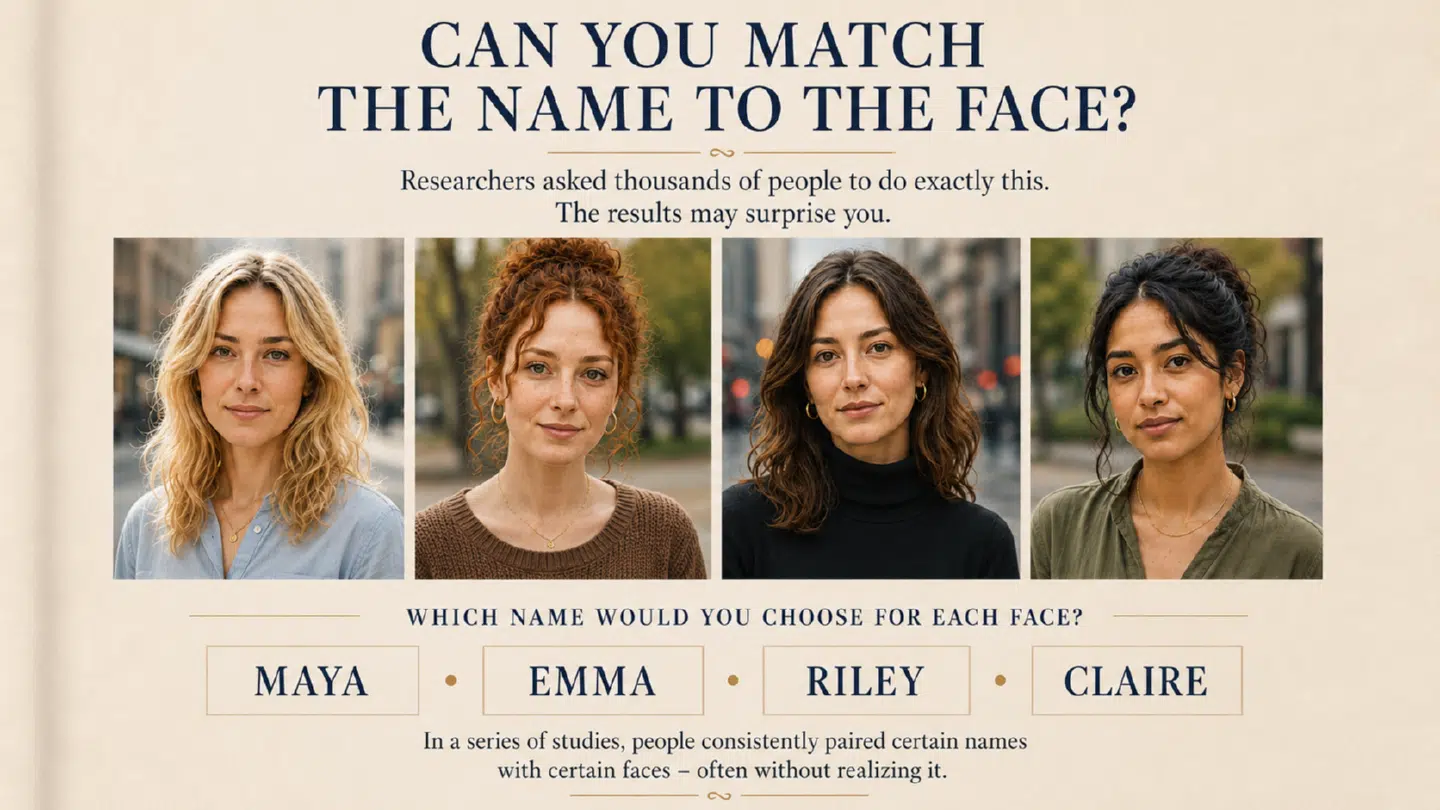
For Rachel and Daniel, the reveal had answered whether they were having a son or daughter. But once they could finally picture the little boy they were naming, another question began to feel much more important: what might people already hear, picture, or expect when they hear his name for the first time?
A Name Can Create An Expectation Before The Person Does
This does not require anything mystical.
Names already carry information.
Some sound commanding. Others refined, youthful, traditional, artistic, serious, unusual, or familiar.
And those impressions can exist before anyone knows whether the person actually fits them.
Public figures have understood this for years.
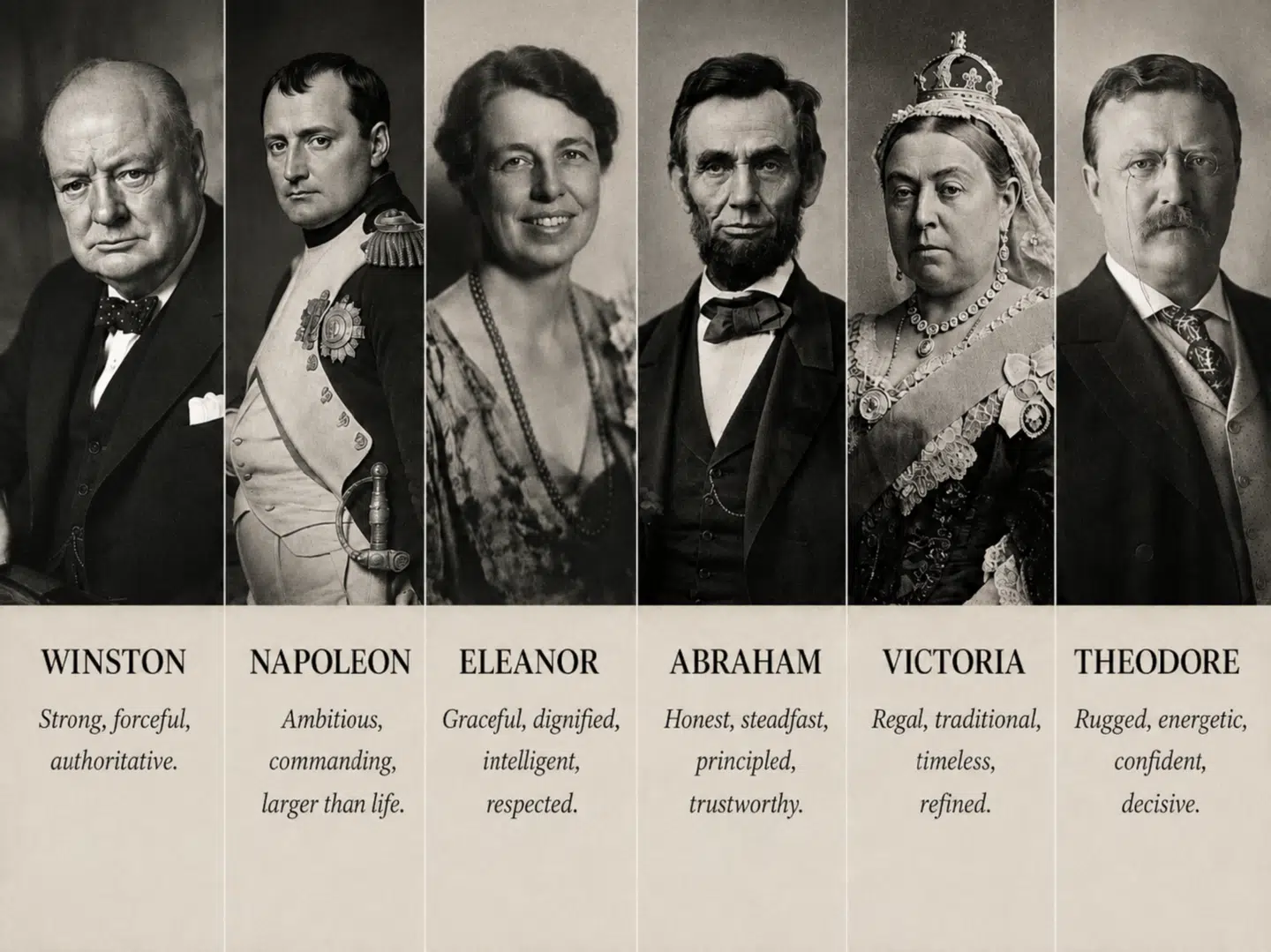
For some public figures, that first impression became important enough to change deliberately.
A name could make someone sound more distinctive, sophisticated, or memorable before an audience knew anything else about them. In some cases, the person behind the name consciously chose a different one because they understood exactly how much an introduction can shape expectation.
Portia de Rossi was born Amanda Rogers. At 15, she legally changed her name. She later explained that she chose Portia after the character in Shakespeare’s The Merchant of Venice, and chose an Italian surname because, growing up in Australia, she associated Europe with something exotic, stylish, cultured, and sophisticated. She also said the name change came during a period when she was trying to find things she could identify herself with.
Amanda had not suddenly become more talented.
But Amanda and Portia did not make the same introduction.
Prince Rogers Nelson experienced something very different.
Prince was not a stage name he adopted after becoming famous. It was his real name from birth.
His father, John Lewis Nelson, performed under the stage name Prince Rogers and led the Prince Rogers Trio, and Prince’s parents gave their son his father’s stage name.
Long before anyone knew the artist he would become, his first name already carried associations with rank, status, and distinction.
The name did not create Prince.
But it certainly arrived before the world discovered him.

Most Parents Think About How A Name Sounds. Few Think About The Introduction It May Be Making.
Celebrities may consciously think about names because the public will remember them.
Most people never have a reason to.
A name is chosen, usually before the person carrying it can even speak, and eventually becomes so familiar that it almost disappears.
But its history does not disappear with it.
Neither do the meanings and associations it has accumulated.
FOUR THINGS A FIRST NAME MAY ALREADY HOLD BEFORE YOU CHOOSE IT
A first name can carry far more history, perception, and meaning than most people ever see.
It May Be Much Older Than You Think
Many familiar first names are only the latest form of a story that may stretch back centuries.
The Definition Is Only The Beginning
A one-line meaning rarely explains how a name changed, traveled, and gathered new associations over time.
Other People May Hear More Than You Do
A name can sound strong, refined, traditional, artistic, youthful, or unusual before anyone knows the person behind it.
Your Child Will Add the Next Chapter
Whatever a name meant before it reached them, their life eventually becomes part of what that name represents next.
You May Be Choosing A Name Your Child Will Hear Thousands Of Times Without Knowing The Story Already Behind It.
Names rarely begin and end with one sentence.
They move through languages and countries. Spellings change. Meanings develop. Historical figures add associations. Literature and culture can reshape how a name is understood.
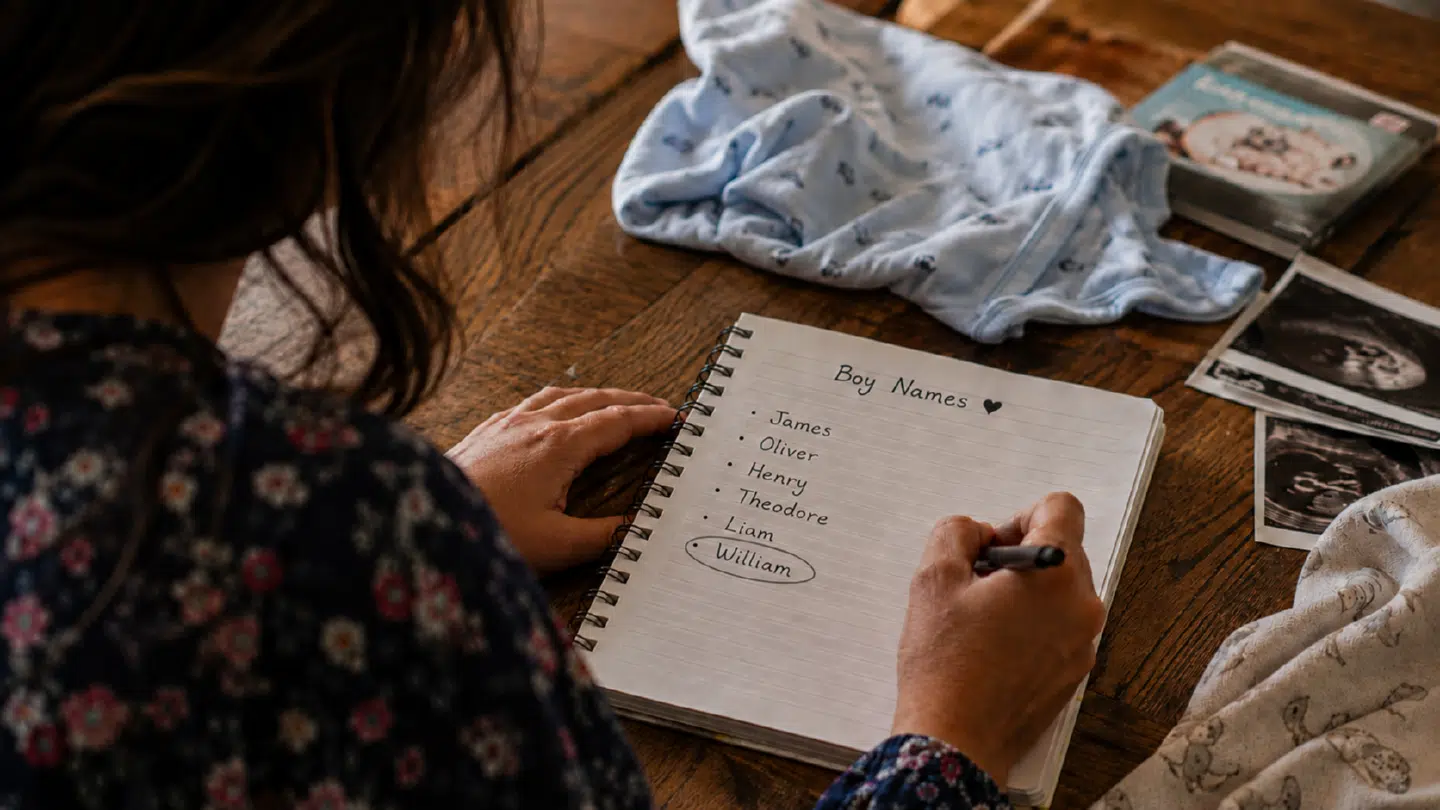
The name being spoken today may be only the newest chapter in a story that began centuries earlier.
What Has Your Baby's Name Been Carrying Before It Ever Reached Them?
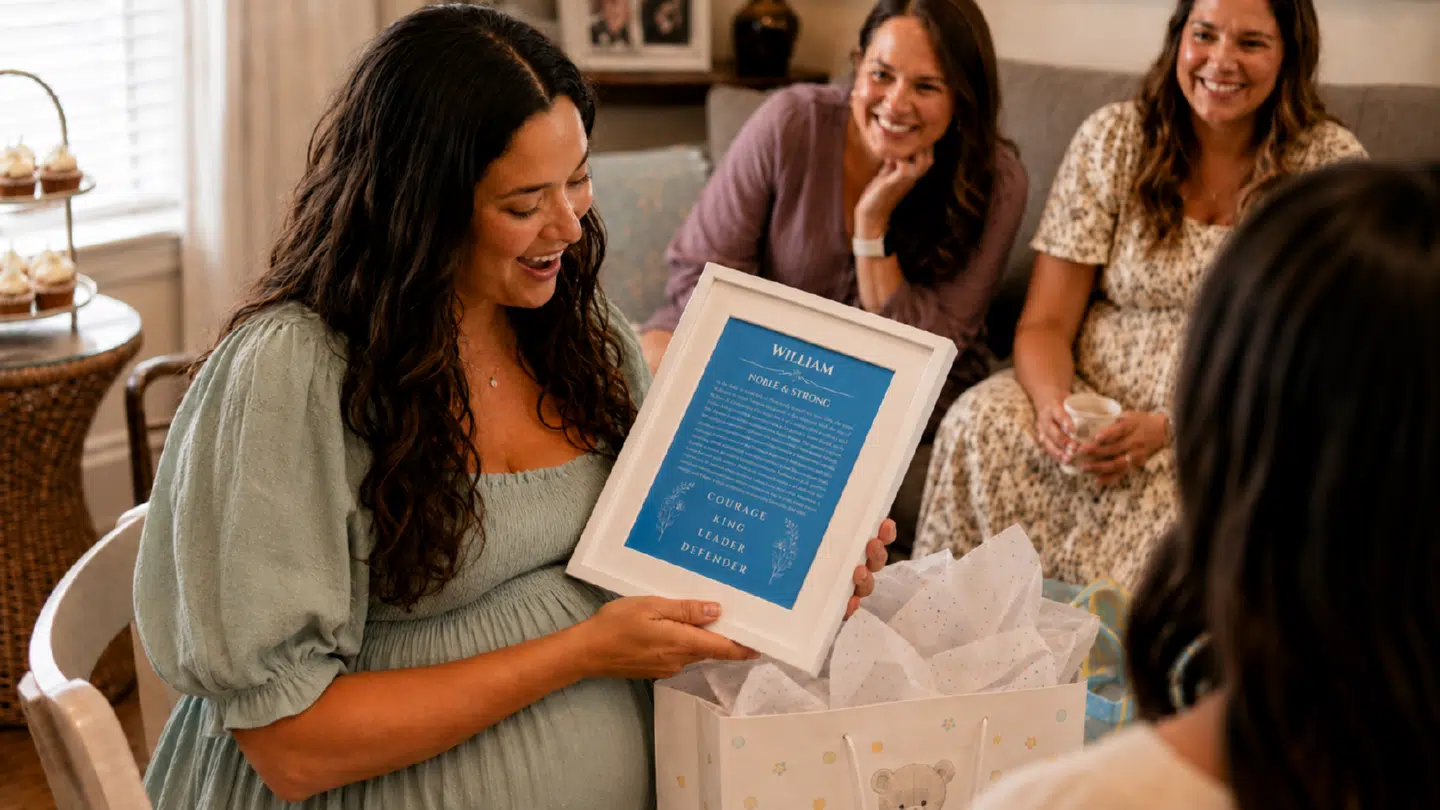
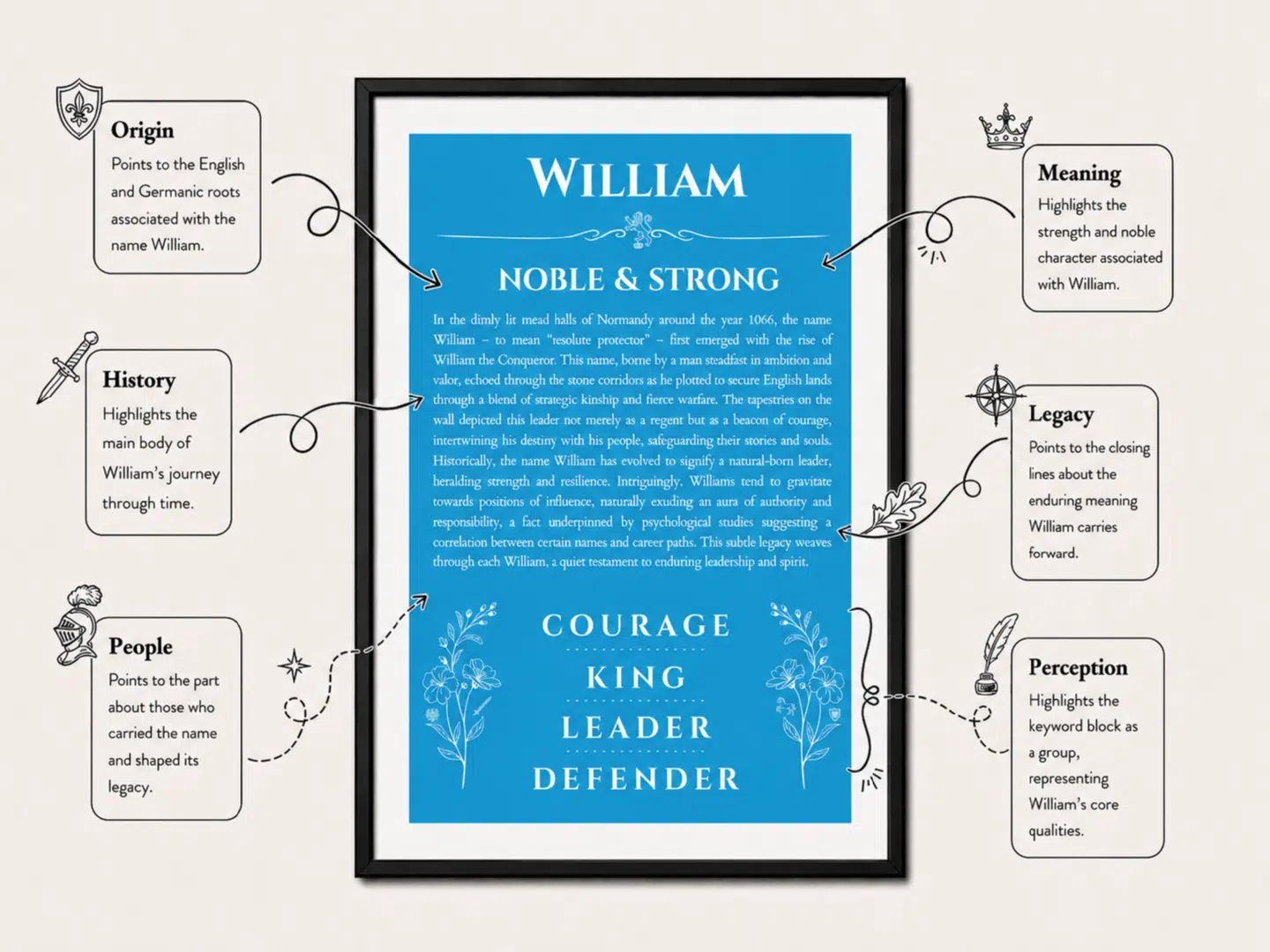
By then, Rachel and Daniel had settled on William. A few weeks later, at their baby shower, a close friend gave them a personalized print about the name. It traced William’s history, meaning, journey and associations, showing them how much had been attached to the name long before they chose it for their son.
WHAT MAY BE HIDING BEHIND A FIRST NAME
- ORIGIN Where the name began.
- HISTORY How it changed through time.
- MEANING What its earliest roots conveyed.
- JOURNEY Where the name traveled and how it evolved.
- PERCEPTION The characteristics and expectations that became associated with it.
- PEOPLE Who carried the name before you.
- LEGACY What the person carrying it today adds to the story.
There Are Really Three Layers To The Name People Hear
Every first name carries more than one kind of meaning. Think of it as a story that builds in layers.
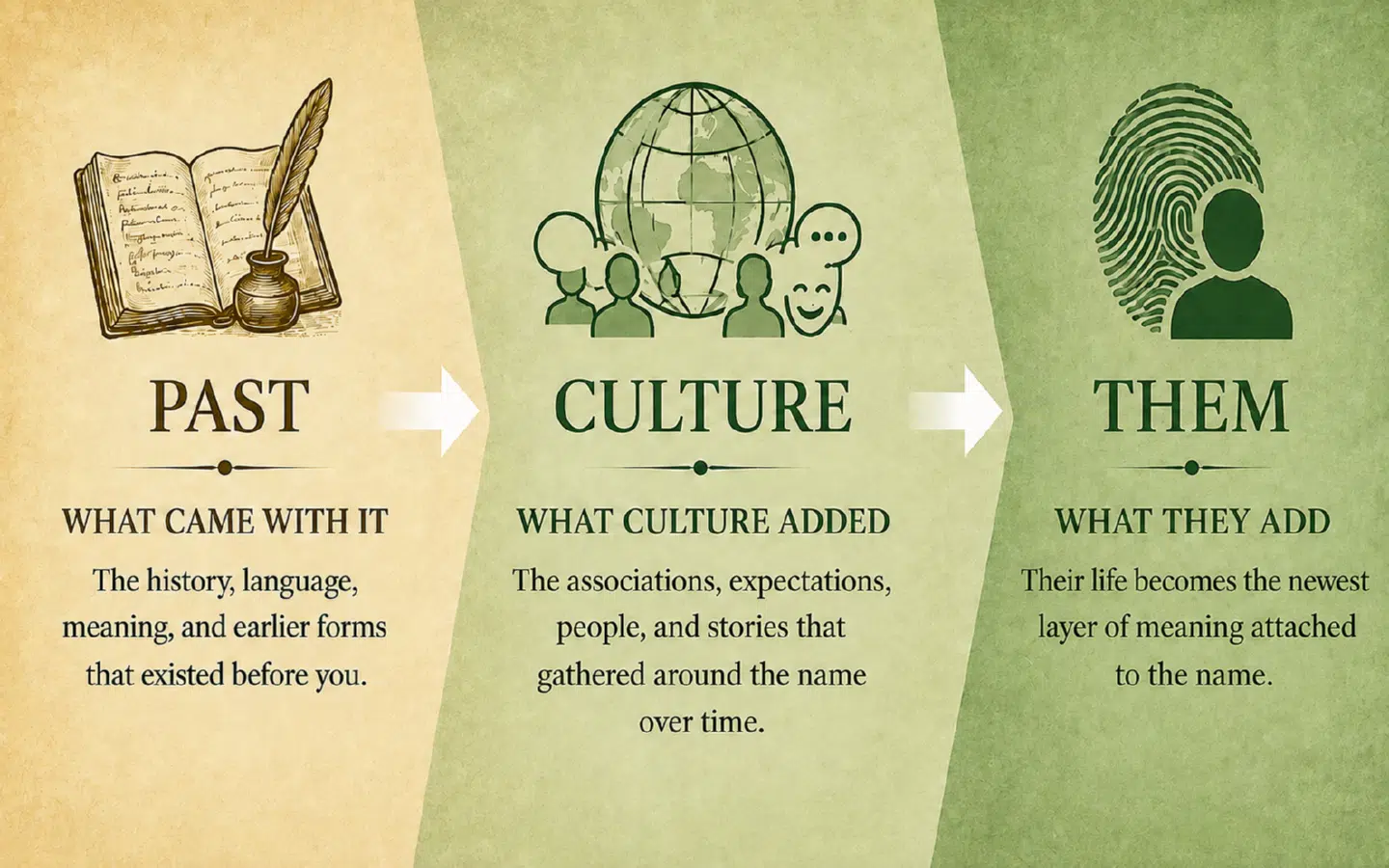
A name arrives with a history. Culture adds expectations. Then your child adds the part no one before them could.
Every person, famous or not, eventually adds something new to the name they carry.
So What Has This Name Been Carrying All This Time?
Most people simply inherit theirs.
They will hear it thousands of times, sign it thousands more, and rarely stop to ask where it came from or what traveled with it.
But the story was already there.
And the part you never knew may be the part that makes you see the name differently.
Carol A.
July 28, 2026
“I’ve looked up my name before, so I thought I already knew what it meant. This was completely different. There were parts of the meaning I had never heard before, and I honestly keep going back and rereading it.”
Addison R.
July 30, 2026
“I wanted to get a baby shower gift that stood out more than clothes or diapers, and this was perfect. It made the name she had chosen for her baby feel even more special. My friend loved it and could barely hold back the tears.”
Nick D.
August 5, 2026
“At first I wasn’t sure how much there could really be to say about a name. I was surprised by how much history there actually was. I’d never really thought about where my name had been before it got to me.”
Their name will be part of every introduction, every signature, every birthday card and almost every important moment of their life.
Before you choose it, find out the story already waiting behind it.

Ⓒ 2026 Boundless America
ADVERTISING DISCLOSURE: This page contains promotional content. Links in this article may direct readers to affiliated companies or third-party products and services. Some names, scenarios, and images in this article are illustrative and are used to demonstrate the subject discussed.