Grocery prices have risen sharply since 2019, and the effect is showing up in shopping carts across the country. Americans are comparing prices more closely, switching brands, changing meals and cutting back on foods they once bought without much thought.
A grocery list used to be fairly predictable.
Milk. Bread. Meat. Produce. A few snacks. Maybe something extra if it looked good.
Now, for many households, the list changes after they see the price.
According to government data cited by the Associated Press, the cost of food eaten at home in U.S. cities is about 33% higher than it was at the beginning of 2019, the largest increase over a comparable period in roughly half a century.
The pace of grocery inflation has slowed from its worst pandemic-era levels, but prices remain elevated. In June 2026, food-at-home prices were still 2.7% higher than a year earlier, according to the Bureau of Labor Statistics.
That combination is changing how people shop.
More Shoppers Are Comparing Before They Buy
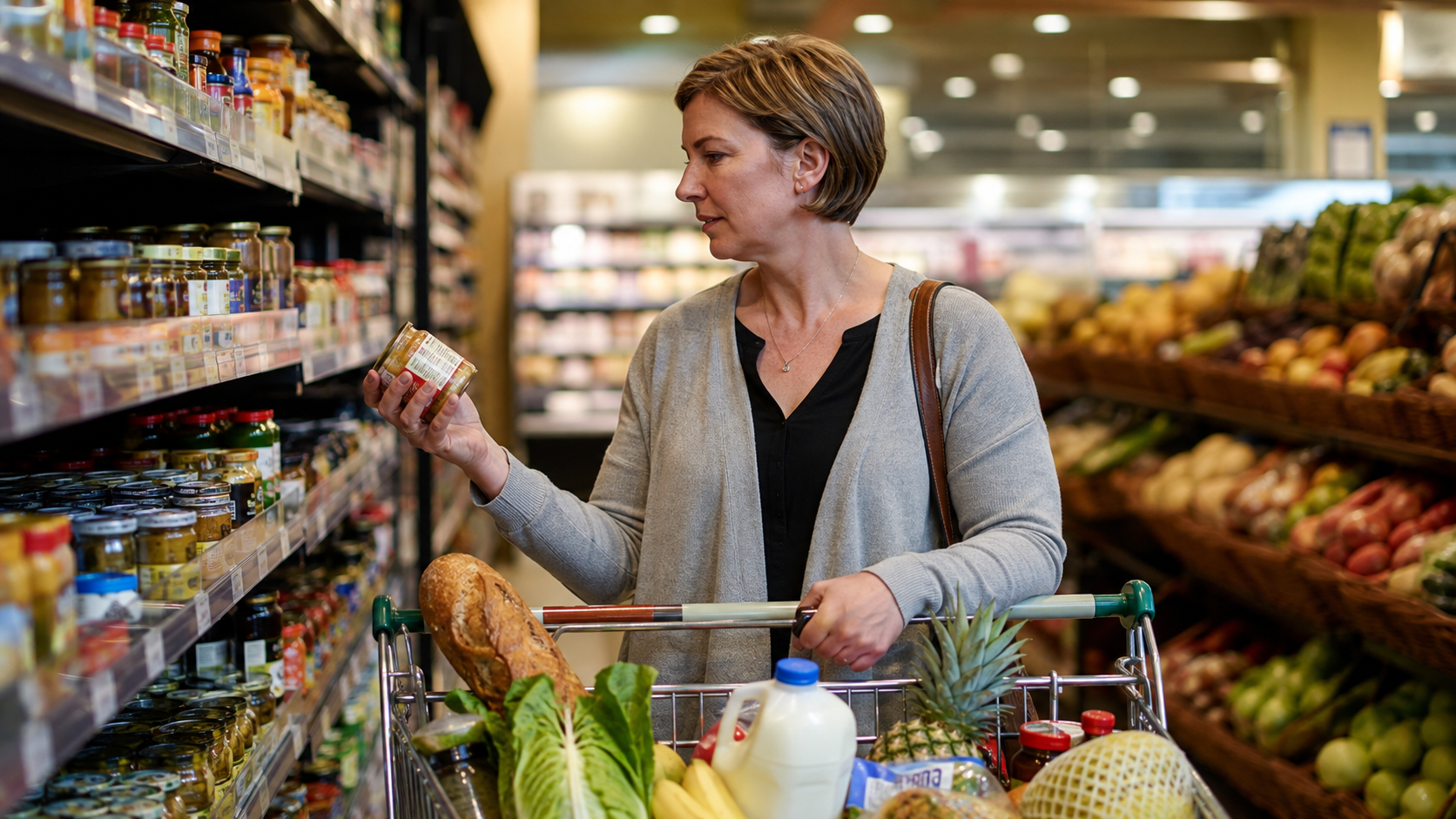
The Associated Press found consumers increasingly checking store apps, reviewing weekly circulars, using coupons and visiting multiple stores to find lower prices. Some shoppers are dropping items entirely if the shelf price is higher than expected.
That is a significant change in behavior.
Instead of choosing a supermarket and buying everything there, more households are treating grocery shopping almost like price comparison for a major purchase.
A few dollars on produce, another few dollars on meat and a cheaper store brand can add up quickly over a month.
Store Brands Are Getting Another Look
Higher prices have also made private-label products more attractive.
For decades, store brands were sometimes viewed mainly as budget alternatives. Today, many retailers offer sophisticated private-label lines covering everything from basic pantry items to premium foods.
When the price difference between a national brand and the store version becomes large enough, brand loyalty becomes easier to reconsider.
Consumers may still prefer the familiar label, but higher grocery bills create a reason to experiment.
Once a shopper discovers that the less expensive version works just as well, that substitution can become permanent.
Meat Has Become One of the Biggest Pressure Points
Beef has become particularly expensive.
The average price of ground beef reached $6.82 per pound in June 2026, about 79% higher than at the beginning of 2019, according to federal data cited by the AP.
The reasons include a smaller U.S. cattle herd, drought conditions and higher production costs.
For some families, that means buying less beef or replacing it with chicken, pork, beans or other proteins.
The shift is not necessarily dramatic at the individual household level.
It may simply mean tacos made with chicken instead of beef, fewer steaks, or meat appearing at dinner fewer nights each week.
Across millions of households, however, those small decisions can change demand.
Grocery Inflation Is Slower, but the Higher Price Level Remains
This is one of the reasons inflation can feel confusing.
A lower inflation rate does not mean prices are returning to where they were.
It means prices are rising more slowly.
USDA currently forecasts food-at-home prices to increase about 2.7% during 2026, close to their long-term historical pace.
But that increase comes on top of the much larger price gains already accumulated since 2019.
So even if grocery inflation returns to something close to normal, consumers are still shopping from a much higher starting point.
The Grocery List Is Becoming More Flexible
Perhaps the clearest change is that many Americans are becoming less attached to a fixed list.
Dinner may depend on what is discounted.
Produce may come from one store and meat from another.
A favorite brand may be replaced.
A recipe may change because one ingredient suddenly costs more than expected.
In that sense, higher food prices are doing more than increasing household expenses.
They are changing the decisions people make before food ever reaches the table.
For millions of Americans, the question at the grocery store is no longer simply:
“What do we need?”
Increasingly, it is:
“What still makes sense at this price?”