For a long time, farmers markets were associated with warm Saturday mornings, folding tables, baskets of produce and a short season that ended when the weather changed.
That image is starting to shift.
In communities across the country, farmers markets are becoming more permanent parts of local life. Some are moving indoors during colder months. Others are adding prepared foods, baked goods, handmade products, live music, children’s activities and special events that keep people coming back even when fresh tomatoes and peaches are out of season.
The result is that many markets are no longer just places to buy produce.
They are becoming places to spend time.
The Market Is Becoming More Than a Shopping Stop
Traditional grocery shopping is usually built around convenience.
People make a list, pick up what they need and leave.
Farmers markets work differently.
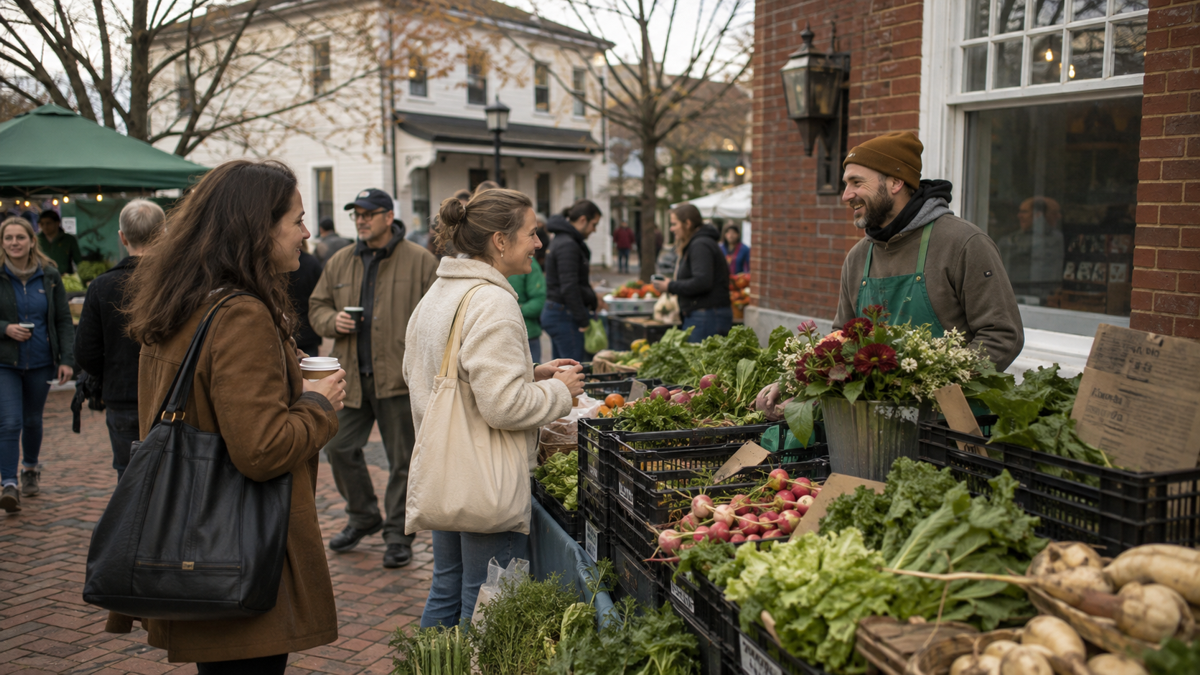
Visitors often move more slowly. They talk with growers, sample foods, browse products they did not plan to buy and run into people they know.
That social side of the experience has become increasingly important.
A market can serve as one of the few places in a community where people of different ages and backgrounds naturally cross paths without needing a formal reason to be there.
Parents may stop with children. Older residents may come for produce and conversation. Younger adults may visit for coffee, baked goods or local crafts.
The shopping is still important, but the experience around it is becoming just as significant.
Year-Round Markets Are Changing the Rhythm
One of the biggest changes has been the growth of winter and indoor markets.
Instead of shutting down completely when the traditional growing season ends, some markets move into community halls, warehouses, churches, converted retail spaces or other indoor locations.
The products may change with the season, but the market continues.
Winter offerings can include bread, meat, eggs, cheese, honey, preserves, mushrooms, root vegetables, prepared meals and locally made products.
That gives vendors a longer selling season and gives residents another reason to gather during months when outdoor community events are less common.
For many markets, staying open longer also helps turn an occasional event into a routine.
When people know the market will be there every week or every month, it becomes part of the community calendar rather than something they attend only a few times each summer.
Small Businesses Are Becoming Part of the Mix
Farmers markets have also expanded beyond farms.
Many now include food trucks, coffee vendors, bakers, florists, artists and small makers selling everything from candles to handmade soaps.
That creates an entry point for businesses that may not yet have a storefront.
A local baker can test new products. A small coffee company can meet customers directly. A craft business can build a following without taking on the expense of a permanent retail location.
For shoppers, that means the market becomes a place to discover businesses they might not otherwise encounter.
For the community, it can create a small local economy concentrated in one place.
The farmer selling vegetables, the bakery selling bread and the artist selling ceramics may all attract slightly different customers, but together they create a reason for more people to visit.
Markets Are Adding More Reasons to Stay
Some communities are intentionally designing markets to encourage people to remain after they finish shopping.
Live music is common.
So are cooking demonstrations, children’s activities, seasonal festivals and spaces where people can sit down with food.
A market that once consisted mostly of vendors arranged along a parking lot may now feel more like a small weekly community event.
That does not require turning every market into a festival.
Sometimes the change is much simpler.
A few tables and chairs can make people stay longer. Coffee and prepared food can turn a morning grocery trip into breakfast. Music can change the atmosphere without dominating it.
Those small additions can make a market feel less transactional and more social.
The Connection to Local Food Still Matters
Even as markets expand, their connection to local food remains central.
Buying directly from growers gives shoppers a clearer sense of where their food comes from and who produced it.
That relationship is different from picking up a package from a supermarket shelf.
Customers can ask when something was harvested, how it was grown or what varieties are available.
Farmers can explain what is in season, recommend ways to prepare unfamiliar produce and get direct feedback from the people buying their products.
That interaction helps preserve one of the qualities that made farmers markets appealing in the first place.
The market may become larger and more varied, but the direct connection between producer and customer remains part of what makes it distinctive.
They Can Also Strengthen a Sense of Place
The most successful markets often feel specific to the communities around them.
A coastal market may feature seafood and regional products.
A rural market may be dominated by farms from the surrounding area.
An urban market may combine produce with restaurants, immigrant food traditions and small makers from nearby neighborhoods.
That local character is difficult to reproduce in a conventional retail setting.
It gives residents something that feels connected to where they actually live.
In a country where many shopping districts can look remarkably similar from one city to another, farmers markets can provide a small counterpoint.
The vendors change. The food changes. The people change.
The market reflects the place around it.
Community Spaces Do Not Have to Be Complicated
There is also something simple about why farmers markets work as gathering places.
They give people somewhere to go.
Not every community interaction needs to happen at a major event, organized club or formal meeting.
Sometimes people simply need a reason to be in the same place at the same time.
A weekly market can provide that.
Someone may arrive to buy apples and end up talking with a neighbor for 20 minutes.
A family may stop for bread and stay to listen to music.
A visitor may discover a local business that becomes a regular part of their routine.
None of those interactions are dramatic on their own.
Together, however, they help create the feeling that a community has places where people naturally encounter one another.
The Farmers Market Is Becoming a Different Kind of Main Street
Farmers markets are unlikely to replace grocery stores, restaurants or traditional shopping districts.
That is not really their role.
What they can provide is something those places do not always offer: a recurring public setting built around local food, small businesses and face-to-face interaction.
As more markets stretch beyond summer and add year-round schedules, their role is changing with them.
The farmers market is still a place to buy fresh food.
But increasingly, it is also becoming one of the places where a community simply comes together.