
Sleep used to be treated mostly as something that happened at the end of the day. Now it is increasingly being treated as a central part of health, performance and everyday well-being.
For years, wellness culture focused heavily on what people did while they were awake.
Exercise.
Nutrition.
Productivity.
Stress management.
Sleep was often treated as the leftover category, something important in theory but easy to sacrifice when schedules became busy.
That is changing.
More people are paying attention to how long they sleep, how consistently they sleep, what affects sleep quality and how the bedroom environment changes the way they feel the next day.
The result is that sleep has moved from the background of wellness into the center of it.
People Are Paying More Attention to Consistency
One of the biggest changes is that sleep is increasingly viewed as a routine rather than a nightly event.
Going to bed at dramatically different times throughout the week can make sleep feel less predictable. For many people, keeping roughly similar sleep and wake times helps the body settle into a more consistent rhythm.
That does not mean every night has to follow an exact schedule.
It means people are becoming more aware that sleep quality is affected by what happens before bedtime and by what time the day begins.
A regular wake-up time, in particular, can help anchor the rest of the sleep schedule.
The Bedroom Is Becoming Part of the Wellness Routine
People are also paying more attention to the physical environment around sleep.
Temperature is one of the biggest factors.
A bedroom that is too warm can make it harder to stay comfortable through the night, while cooler temperatures are generally associated with easier sleep for many adults.
Light matters too.
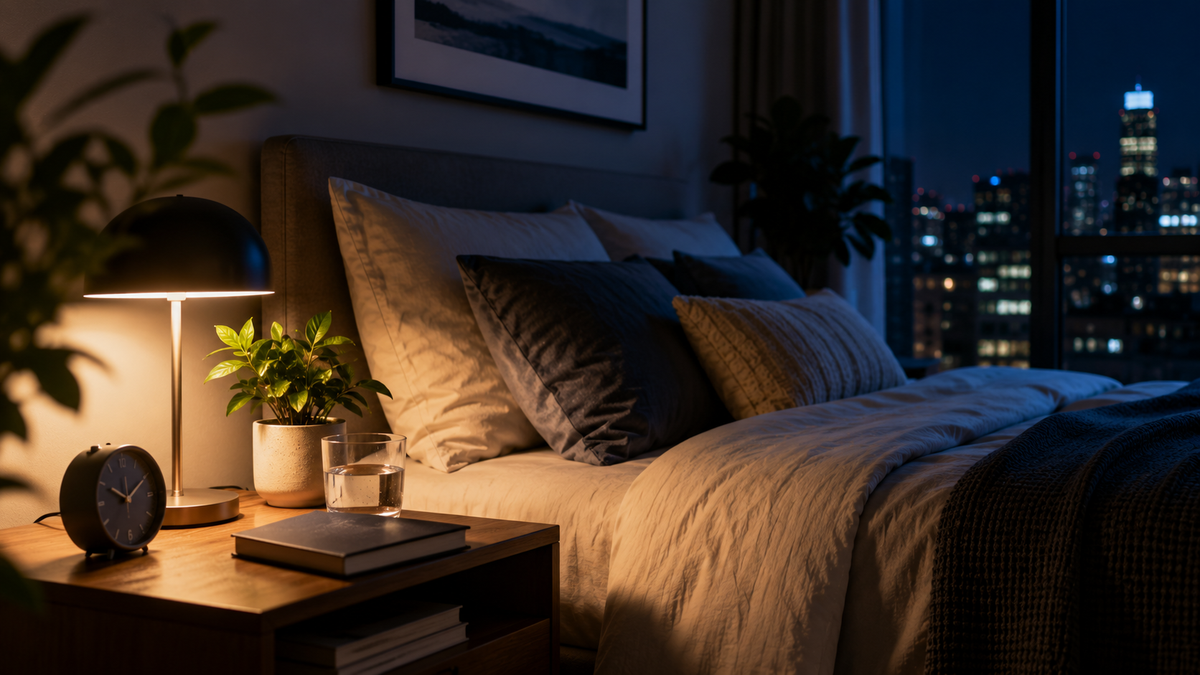
Blackout curtains, dimmer lamps and lower evening brightness are becoming common because people increasingly understand that bright light late at night can interfere with the body’s natural preparation for sleep.
Noise is another variable.
Some people prefer silence. Others use fans, white noise or other steady background sounds to reduce sudden changes that might wake them.
The important shift is that people are treating the bedroom as an environment that can be adjusted rather than simply a place where sleep happens.
Evening Light Is Getting More Attention
Phones, televisions and tablets have become deeply embedded in evening routines.
That has made light exposure before bed a much bigger part of the sleep conversation.
Bright light can signal alertness to the brain, especially when it appears late in the evening. As a result, some people are reducing screen brightness, using warmer lighting or creating a period before bed when screens are used less.
The effect does not depend on completely eliminating technology.
Even small changes, such as lowering room lights later in the evening or keeping the phone farther from the bed, can make the transition into sleep feel more deliberate.
Caffeine Timing Matters More Than Many People Realize
Coffee is often discussed in terms of how much someone drinks.
Timing can be just as important.
Caffeine can remain active in the body for hours, which means an afternoon coffee may still affect sleep later that night.
That is why some people are experimenting with earlier caffeine cutoffs rather than giving it up entirely.
A morning coffee may have little effect on bedtime.
A late-afternoon energy drink can be a different story.
The growing focus on sleep has made people more aware that daytime habits can influence nighttime rest long after they seem finished.
Exercise Can Help, but Timing and Intensity Matter
Physical activity is also closely connected with sleep.
Regular exercise is commonly associated with better sleep quality, but the relationship is not always identical for everyone.
Some people sleep well after evening exercise.
Others find intense late-night workouts make it harder to wind down.
That is why sleep-focused routines are becoming more individualized.
Instead of following one universal rule, people are paying more attention to how their own bodies respond.
Morning walks, afternoon strength training or evening stretching may all work differently depending on the person.
Sleep Trackers Have Changed the Conversation
Wearable devices have also made sleep more visible.
Watches, rings and other trackers can estimate sleep duration, movement, heart rate and other nighttime patterns.
These devices are not perfect, but they have changed how people think about sleep.
Instead of saying, “I think I slept badly,” someone may now look at several weeks of data and notice a pattern.
Perhaps sleep is shorter after late meals.
Perhaps weekends are dramatically different from weekdays.
Perhaps bedtime is consistent but wake time is not.
That kind of information can make sleep feel measurable in a way it rarely did before.
More People Are Creating a Wind-Down Period
Another common change is the creation of a transition between daytime activity and sleep.
The body does not necessarily move instantly from work, entertainment or household tasks into rest.
Some people now build in a short period where stimulation decreases.
That might mean:
- reading
- taking a shower
- dimming the lights
- stretching
- listening to quiet music
- preparing clothes for the next morning
- leaving the phone outside the bedroom
The routine itself does not have to be complicated.
Consistency is often more important than complexity.
Over time, repeated habits can become signals that the day is ending.
Better Sleep Is Not About Making Every Night Perfect
The increased focus on sleep has also created a risk of turning rest into another performance metric.
Not every night will be ideal.
Travel, work, children, illness, stress and ordinary life will disrupt sleep sometimes.
The more useful approach is often to look for patterns rather than perfection.
One poor night matters much less than a schedule that is consistently misaligned with what the body needs.
That is why many sleep improvements are surprisingly ordinary.
A cooler room.
Less caffeine late in the day.
More consistent bedtimes.
Lower lights at night.
A little more movement during the day.
Fewer interruptions.
None of those changes is dramatic.
Together, they can make a noticeable difference.
Sleep Is Becoming Part of How People Think About Health
The biggest shift may be conceptual.
Sleep is no longer being treated simply as recovery from everything else.
It is increasingly understood as something that affects everything else.
Energy.
Concentration.
Mood.
Exercise.
Appetite.
Decision-making.
Stress.
Performance.
That is why sleep has become such a major wellness priority.
People are realizing that improving the day often starts with what happened the night before.