
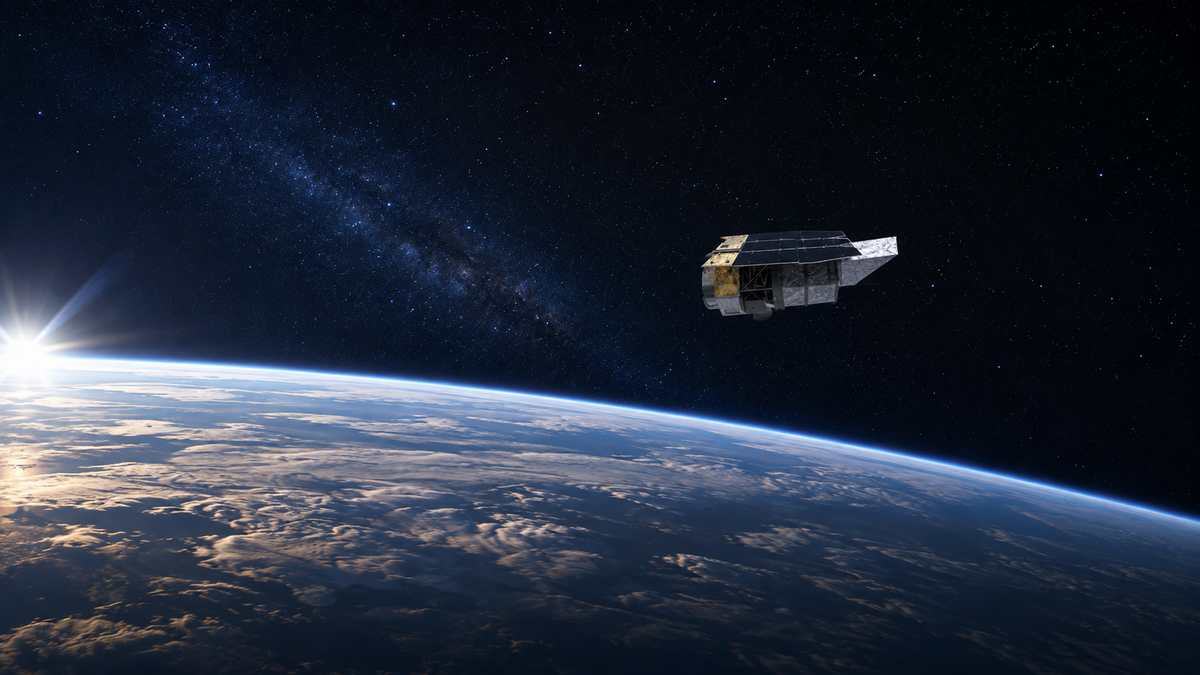
For most people, space telescopes are easy to flatten into a single category: large machines that take stunning pictures of the universe. In reality, each new generation changes what scientists are able to observe, measure and ask. The next major shift is already taking shape.
Space telescopes are not important simply because they sit above Earth’s atmosphere.
They matter because each one is built to do something previous observatories could not do well enough, wide enough or deeply enough.
Hubble transformed astronomy by giving scientists sharp, stable images from orbit and helped turn distant galaxies, nebulae and supernovae into part of everyday public imagination. The James Webb Space Telescope pushed even farther, revealing the infrared universe in extraordinary detail and allowing astronomers to study some of the earliest structures ever observed.
Now another step is coming into view.
NASA’s Nancy Grace Roman Space Telescope is designed to give astronomers something different from either Hubble or Webb: a much wider view of the universe at high resolution. If Webb is exceptional at looking deeply into selected parts of the sky, Roman is meant to survey far larger regions much faster.
That may sound technical, but it changes the kind of science a telescope can do.
A Wider View Can Change the Questions
Astronomy is not only about taking better close-ups.
Sometimes the real breakthrough comes from seeing more of the sky at once.
Roman’s field of view is dramatically larger than Hubble’s, which means it will be able to observe huge cosmic areas in a fraction of the time older systems would need. That matters because some of the biggest mysteries in astronomy are not hidden in one spectacular object. They are hidden in patterns spread across enormous distances.
How are galaxies distributed?
How has the universe expanded over time?
What is dark energy doing to that expansion?
How common are planets around other stars?
Those are not questions answered by a single image. They are answered by large surveys, statistical power and the ability to collect immense amounts of data.
That is what makes this next generation interesting.
The Future of Space Astronomy Is Not One Telescope Replacing Another
One of the easiest misconceptions is that every new telescope replaces the one before it.
That is not really how modern astronomy works.
Hubble, Webb and Roman are better understood as different tools with overlapping but distinct strengths.
Hubble has remained useful because it sees the universe in ways later observatories do not simply duplicate. Webb excels at deep infrared observation. Roman is expected to open a panoramic view of the infrared universe, allowing researchers to study hundreds of millions of galaxies and conduct major surveys of exoplanets and cosmic structure.
In other words, the future of space astronomy is increasingly about combination.
A wide-field observatory can spot patterns or identify promising targets. A more specialized telescope can then examine those targets in greater detail. One mission supplies the map. Another studies the details.
That layered approach is becoming one of the defining strengths of modern astrophysics.
Exoplanets Are Part of the Story Too
The next generation of space telescopes is not only about galaxies and cosmology.
It is also about planets.
Roman is expected to contribute to the search for exoplanets in a way that differs from some previous missions. Rather than focusing only on a small number of nearby systems, it is designed to help build a broader census of planetary systems in our galaxy.
That matters because one of the biggest questions in astronomy is no longer whether planets exist around other stars.
We already know they do.
The more interesting question now is how common different kinds of planetary systems are, and how unusual or ordinary our own solar system might be.
The more sky scientists can survey, the better they can begin answering that.
The Images Will Matter, but So Will the Data
Public attention often follows the images, and that makes sense. Images are how space telescopes become part of popular culture.
But the deeper revolution is often in the data.
The next generation of observatories is producing science on a much larger scale. It is not only about one beautiful photograph of a nebula or galaxy. It is about building datasets large enough to reveal patterns that were previously impossible to measure convincingly.
That is one reason these telescopes can reshape astronomy even when the public may not immediately understand every scientific objective.
A famous image may become the symbol of a mission.
A massive survey may be its more important legacy.
We Are Entering a Different Kind of Space Era
There is also something broader happening.
The American space program is moving into an era where major telescopes, lunar missions and private launch capabilities increasingly exist at the same time rather than as isolated milestones separated by decades.
That gives astronomy a different rhythm.
A new telescope is no longer just a distant promise that might fly someday. It is part of a larger, more active space environment in which launch capacity, scientific ambition and public interest are all moving at once.
That makes the arrival of new observatories feel less like a single event and more like part of a larger shift.
The View Is About to Get Bigger
Every important telescope changes human perspective a little.
Some show us deeper time. Some show us finer detail. Some reveal objects or wavelengths that were previously hidden.
The next generation is poised to do something equally valuable: widen the view.
That may prove especially important because many of the biggest scientific questions now depend on scale. To understand the structure of the universe, the role of dark energy, and the distribution of worlds beyond our own, astronomers increasingly need not just better vision but broader vision.
That is what makes this moment significant.
The next big change in space astronomy may not simply be seeing farther.
It may be seeing more.